
UPPER PROVIDENCE LIVING: article by Karilen Mays, Photos by Kailey Edwards Photography
Cornerstone for Hope, a local non-profit, helps people in long-term recovery gain employment through training. They started with a broader focus, funding scholarships for recovery, helping families and people get treatment, educating the community, and helping families.
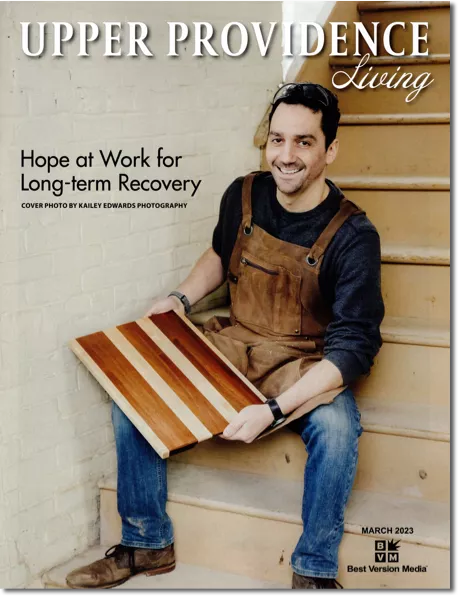
Now, the focus is on a program called Recovery Worx.
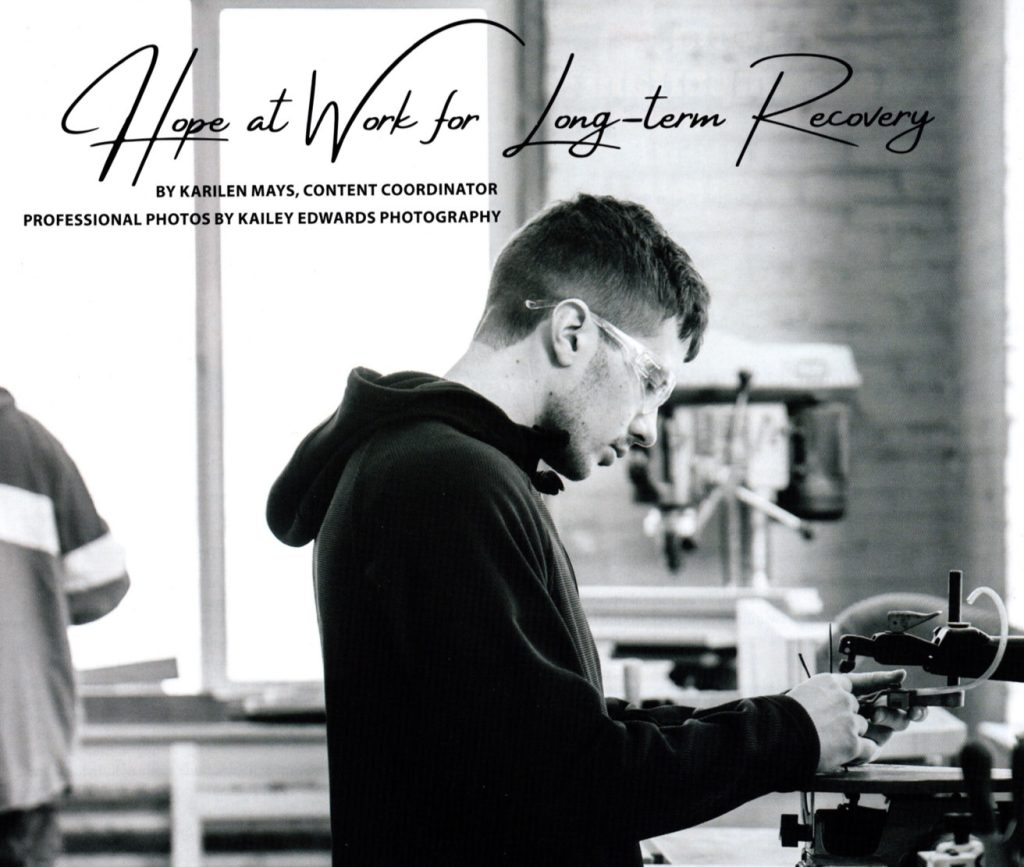
Recovery Worx is for people who have completed an inpatient recovery program and are entering the workforce. Participants build marketable skills and get help with resumes, interviewing, and job placement through local community leaders. There is a new Recovery Worx location opening in Upper Providence Township.
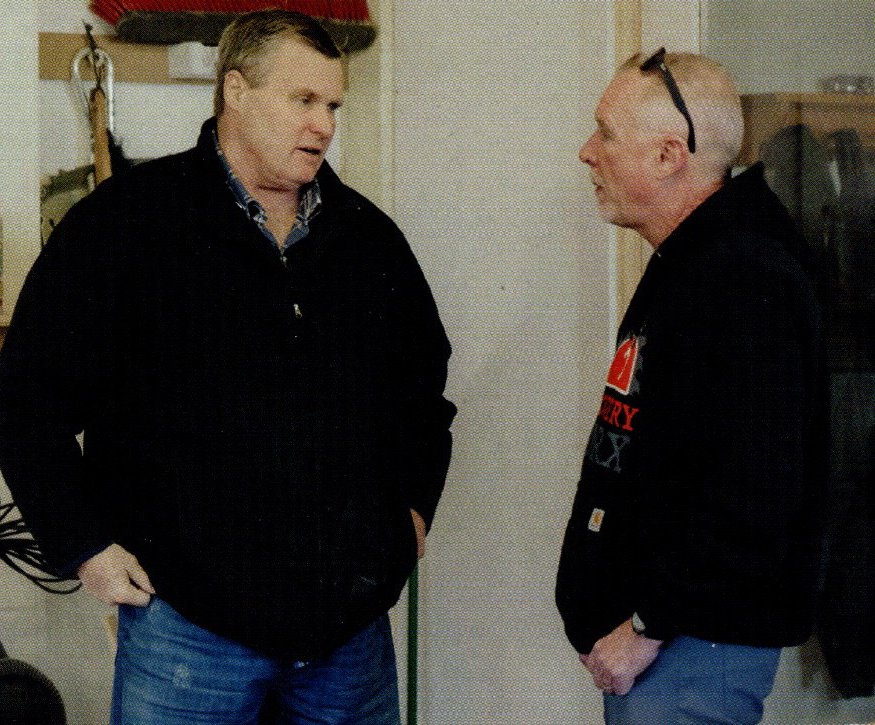
George Hall, the acting Executive Director, helps with getting the message out, fundraising, working with the Board, and developing programming. With personal experience seeking help for a loved one with addiction, he has helped many people find treatment and support. George constantly educates people. “It is important that people understand that this is a disease,” said George. “People still have a responsibility to seek treatment. It is a disease and needs to be treated as such.”
Recovery Worx grew out of another program in the area. Steve Killelea is the founder of Manor of Hope and a supporter of Recovery Worx. Seven years ago, Steve Killelea started Manor of Hope, a long-term program for men with substance use and mental health issues. There has been a lot of success, and Manor of Hope is a cutting-edge therapeutic program. In January 2019, Upper Providence Living featured Steve and his son, John.
Steve saw the difficulties men had with skills and confidence in getting into the job market while in long-term recovery. He took the Recovery Worx program as far as he could on his own, and in January 2022, a non-profit board formed to lead Cornerstone for Hope. Steve and George have each helped many people in long-term recovery who struggle with self- esteem and skills after. They both know the area needs this kind of support.
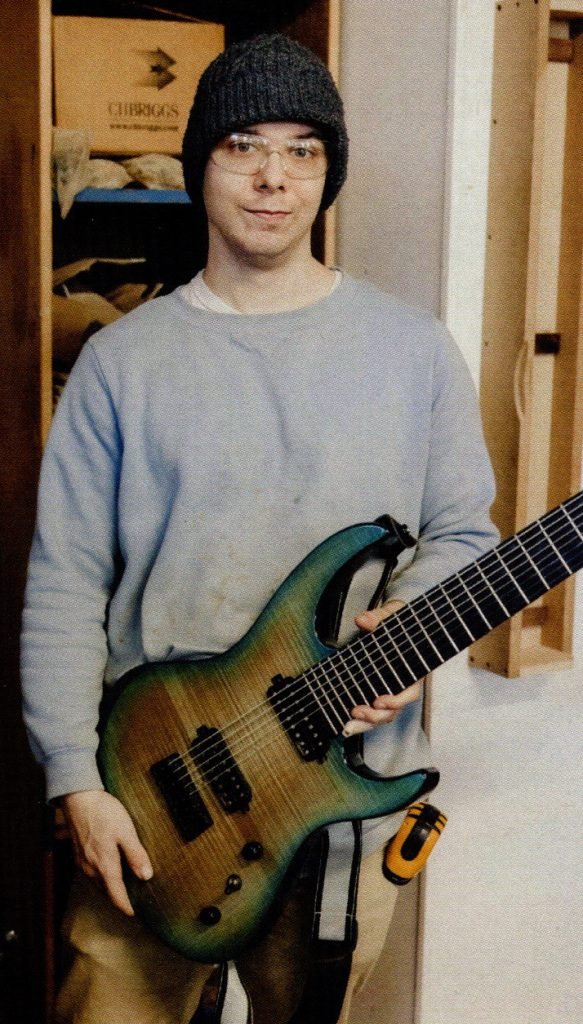
Participants in the program learn skills, plan a project, take an apprenticeship, and build the confidence they need to get a job in a different field if they choose after completing the program.
Recovery Worx partnered with a local business to lease a space in Royersford where an instructor teaches woodworking. They make beautiful high-end Adirondack chairs, cutting boards, bowls, signs, coffee tables, and unique furniture such as live edge tables. They will showcase these products in the new store opening in Upper Providence. There will be other items created by folks in recovery displayed in the store, such as artwork, jewelry, bonsai trees, and honey. The idea is to show off what people in recovery can do.
The new Recovery Worx location in Upper Providence Township will also have a space for meetings and a free resource center. for support and recovery
In the future, the vision is to expand the programs to include women and offer training in a variety of areas. To do this, Cornerstone for Hope needs to reach more people, including donors, volunteers, and businesses, to partner with the program.
The statistics on substance use and mental health challenges are staggering and relevant to all of us. Nearly everyone has been touched by addiction or mental health somewhere in their lives.
According to Mental Health First Aid, over 46% of adults in the US will face a mental health challenge in their lifetime.
According to Mental Health First Aid, over 46% of adults in the US will face a mental health challenge in their lifetime. According to the Substance Abuse and Mental Health Services Administration (SAMHSA),
“For people in substance use disorder treatment, gainful employment is strongly linked to better recovery outcomes. Obtaining and maintaining employment helps clients establish a legal source of income, structure their time, and improve self-esteem, which may greatly reduce substance use and criminal activity.”
There is a great need for help with substance use and the associated life challenges. Among people aged 12 or older in 2020, 58.7 percent (or 162.5 million people) used tobacco, alcohol, or another substance in the past month, according to SAMHSA. It can be overwhelming and confusing to get help. For example, if you have a family member who drinks too much, you may not know what to do. The community resource library at Recovery Worx in Upper Providence will make it easier to get help.
“Everything we are doing is evidence-based,” said George. “What has been interesting and heartwarming are the success stories and people we help, and community business people embracing what we have done and taking on some of our people post-treatment to work in their businesses.”
“We serve the community in different ways,” George shares some of the impacts of the programs. “We lower drug use, relapse, and criminal activity and put appreciative people to work in the community.” They have helped over 100 people get back into the workforce in the Phoenixville, Collegeville, and Philadelphia areas.
Educating people about addiction and mental health challenges makes it easier to get support. Often people do not talk about addiction until they face an issue. Both substance use and mental health challenges can affect anyone from any background, and they often go together. It takes a toll on families and communities. When asked what keeps him focused, Steve says, “a mindset of gratitude. I understand and desire to help every day. I never forget how grateful and lucky I am.”
“Addiction is a disease. Remember that when you encounter an individual with this,” encourages George. “No one starts out think- ing, ‘I want to be a drug addict.’ It is not a moral failure. There is a path to recovery. It starts with inpatient treatment and transitions to a long-term therapeutic community or program. Then, the next step is to come to a place like Recovery Worx.”
You can send a message through the contact form on the website if you are looking for treatment programs or have a question. There are many ways to get involved and connect. Anyone can also reach out if they want to help. If you have a business and want to help with skill development or volunteer, visit our website.
George invites, “When we open our new location, please stop by to say hello and see what we are doing.”
Click here for more information about our Recovery Worx program.